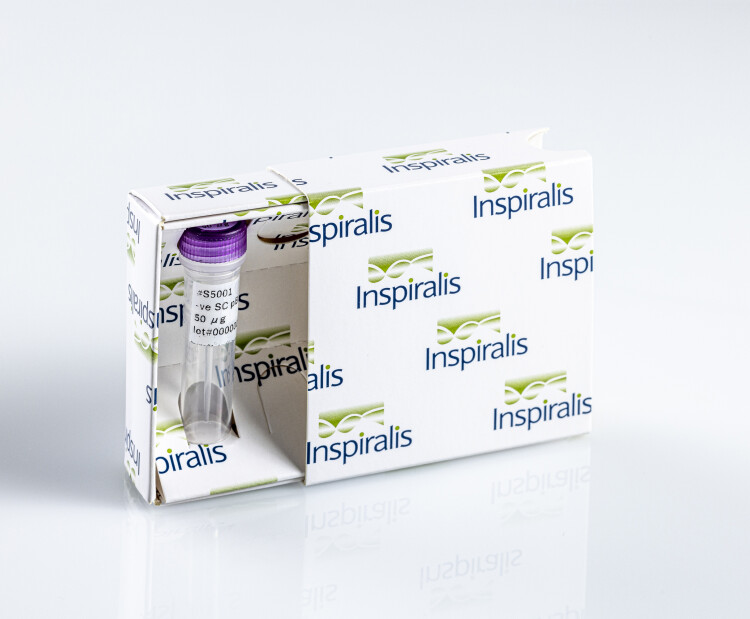
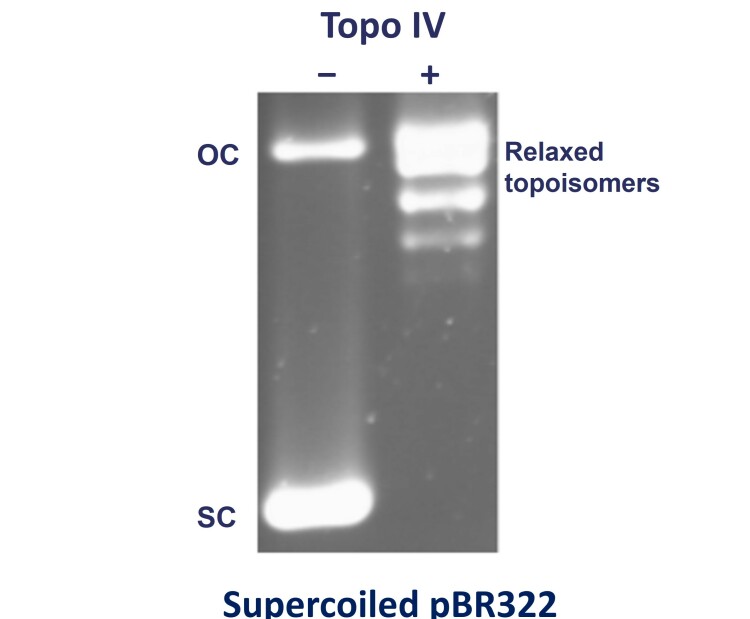
Supercoiled pBR322 DNA
- Highly defined supercoiled plasmid DNA ideal for studying DNA topology and enzyme mechanisms
- Prepared using the large-scale alkaline lysis method from a high-copy derivative of pBR322
- Negatively supercoiled DNA refined for tight linking number distribution and reproducible relaxation assays
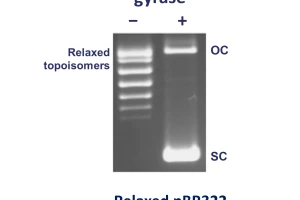
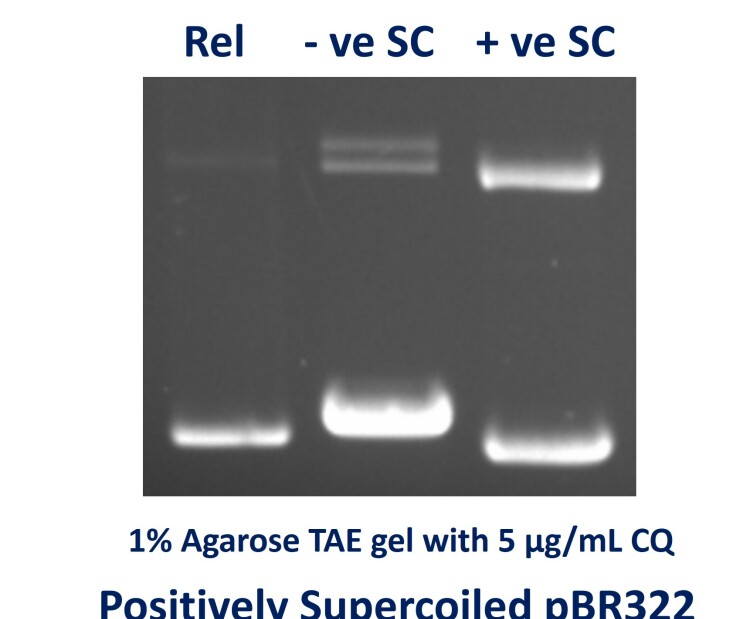
- Positively supercoiled pBR322 DNA produced via reverse gyrase treatment for unique comparative studies
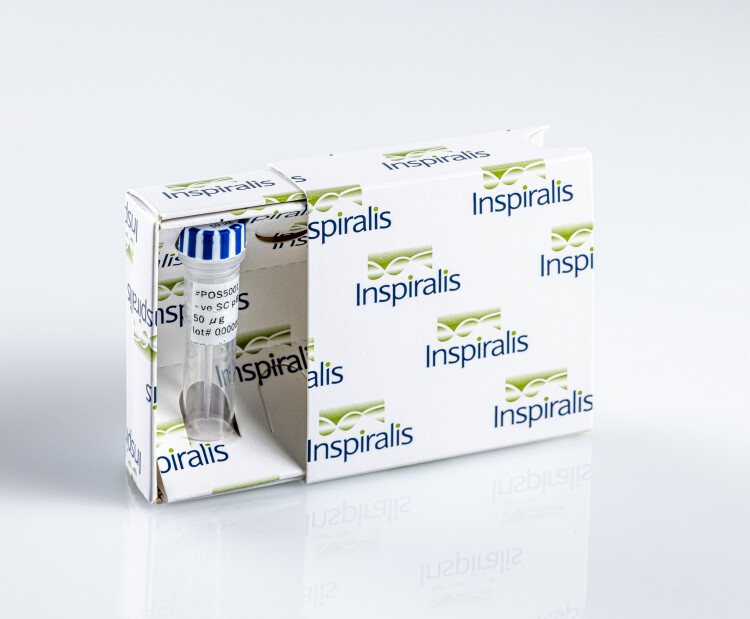
- Supplied at 1 mg/ml in TE buffer (10 mM Tris-HCl, pH 7.5, 1 mM EDTA) for stability and consistency
- Suitable for topoisomerase relaxation assays, DNA gyrase studies, and plasmid supercoiling experiments
- Enables direct comparison of positively and negatively supercoiled DNA plasmids
- Can be used as control DNA for enzyme characterisation and inhibitor screening
- Stringent quality control ensures reproducibility and high batch-to-batch consistency
- Store at -20°C for long-term stability and reliable performance
- Supported by technical documentation and expert assistance for assay optimisation
Supercoiled plasmid DNA is an essential tool for studying DNA topology and enzyme mechanisms. Our pBR322 DNA substrates are prepared to rigorous standards, offering highly defined supercoiled DNA plasmids for use in relaxation assays.
Preparation and quality
Supercoiled plasmid pBR322 DNA is produced by the large-scale alkaline lysis method (Sambrook et al., 1989) from a high-copy derivative of pBR322 (Boros et al., 1984). Negatively supercoiled pBR322 DNA is further processed to increase the degree of supercoiling and achieve a narrow distribution of linking numbers. This ensures uniformity and makes the substrate ideal for reproducible relaxation reactions with enzymes such as DNA topoisomerase I, and topoisomerase I.
For positively supercoiled DNA plasmids, negatively supercoiled pBR322 DNA is treated with reverse gyrase before undergoing final purification. This preparation provides a unique and well-defined substrate for assays investigating DNA topology and enzyme activity under conditions of positive superhelicity.
Product format
All plasmid DNA preparations are supplied at a concentration of 1 mg/ml in TE buffer (10 mM Tris-HCl, pH 7.5, 1 mM EDTA). The DNA is stable when stored at 4°C and maintains consistent performance across a wide range of applications.
Applications
- Substrate for relaxation reactions with DNA topoisomerases
- Studies of DNA gyrase and plasmid supercoiling activity (positively supercoiled pBR322 only)
- Comparative assays with positively and negatively supercoiled DNA plasmids
- Control DNA in enzymatic characterisation or screening experiments
Storage and stability
Store pBR322 DNA substrates at -20°C for reliable long-term stability. Each batch is prepared under strict quality control to guarantee reproducibility and accuracy.
Our supercoiled DNA plasmid substrates provide researchers with consistent, well-defined DNA for studies of plasmid supercoiling and enzyme mechanisms, supporting both academic research and pharmaceutical discovery.
FAQs about Supercoiled pBR322 DNA
What is pBR322 DNA and why is it useful?
pBR322 DNA is a well-characterised plasmid widely used in molecular biology and enzymology. Our preparations provide supercoiled DNA plasmids with defined topology, making them ideal substrates for studying DNA topoisomerases (negatively and positively supercoiled plasmid), DNA gyrase and plasmid supercoiling reactions (positively supercoiled plasmid only).
How is the supercoiled plasmid DNA produced?
Negatively supercoiled pBR322 DNA is generated using a large-scale alkaline lysis method followed by additional processing to increase the degree of supercoiling. This narrows the distribution of linking numbers, giving a highly uniform substrate for relaxation reactions.
Do you supply positively supercoiled DNA plasmids?
Yes. Positively supercoiled pBR322 DNA is prepared by treating relaxed plasmid DNA with reverse gyrase before final purification. This allows researchers to compare enzyme activity on both negatively and positively supercoiled substrates.
What buffer is the DNA supplied in?
All preparations are supplied at 1 mg/ml in TE buffer (10 mM Tris-HCl, pH 7.5, 1 mM EDTA). This buffer maintains DNA integrity and provides stable conditions for storage and handling.
How should pBR322 DNA be stored?
Store at -20°C for long-term stability. The DNA is stable under these conditions and can be used reliably across multiple experiments. Avoid repeated freeze–thaw cycles, which may affect supercoiling.
What are the main applications of pBR322 DNA substrates?
Applications include:
- Relaxation assays with DNA topoisomerase I and II
- Studies of DNA gyrase and plasmid supercoiling activity (with positively supercoiled plasmid only)
- Comparative analysis of positively and negatively supercoiled plasmid DNA
- Control DNA for enzyme characterisation and inhibitor screening assays
Is technical support available?
Yes. Our scientific team can provide guidance on selecting the right form of pBR322 DNA and assist with experimental set-up or assay optimisation.
References
- Sambrook, J., Fritsch, E.F. & Maniatis, T (1989). Molecular cloning: a laboratory manual,2nd ed., Cold Spring Harbor Press. Cold Spring Harbor, NY.
- Boros, I., Pósfai, G. & Venetianer, P. (1984). High-copy number derivatives of the plasmid cloning vector pBR322. Gene 30, 257-260
Technical Documents
Data Sheets
- Need help?
- Call us on +44 (0) 1603 673591
- Email on [email protected]